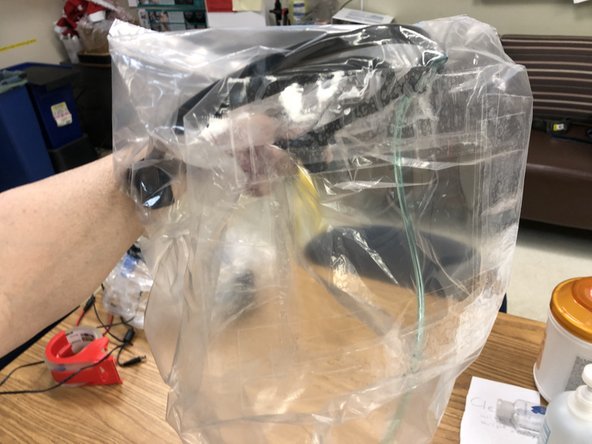
The COVID-19 pandemic has created severe shortages of protective airway equipment. Providers are forced to forego adequate personal protection due to dwindling supply PAPR, CAPR, and N95 mask supply. Masks that should be single use are being ad-hoc sterilized and reused.
It is due to this emergent need, that I have released the Bunny Science HALO PAPR.
This is a buildable protective respirator. Although this is not a regulatory body approved product, I am making this available as a physician anesthesiologist fulfilling "good samaritan" duty. I have applied my 30 years of medical experience, familiarity with ventilation, and design skills to create and test this respiratory.
Although I believe the physics are sound, use of this Halo respirator is at your sole discretion and risk.
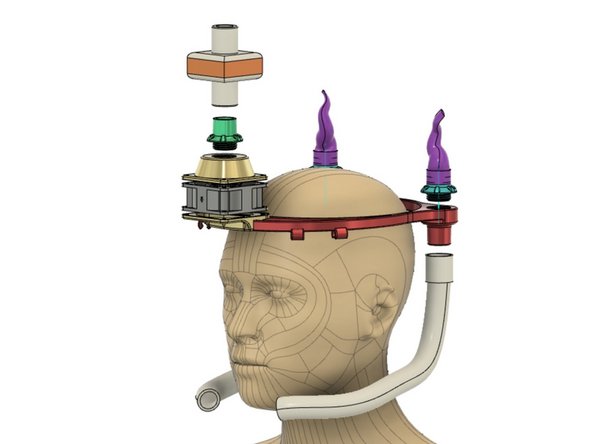
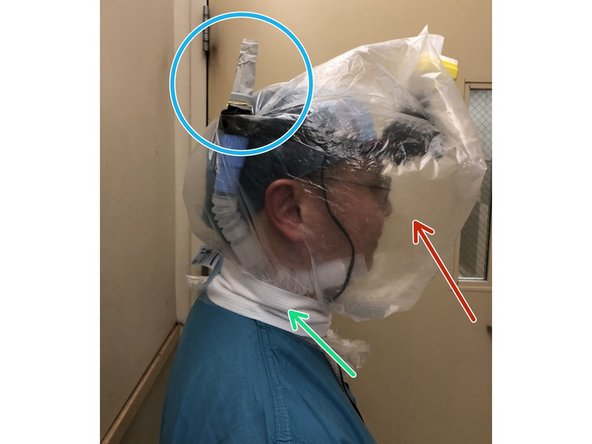
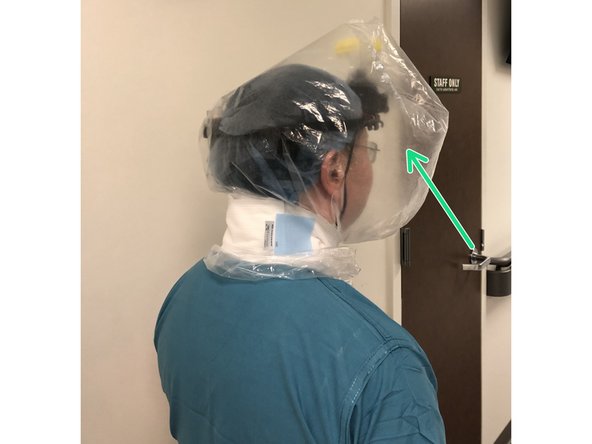
The Halo is intended to achieve protection by keeping the users entire head in a positive pressure, clean gas environment. It is easily buildable. Equally important in these times of scarcity, its disposables are easily obtained.
The Halo can be configured for three types of virus-free air.
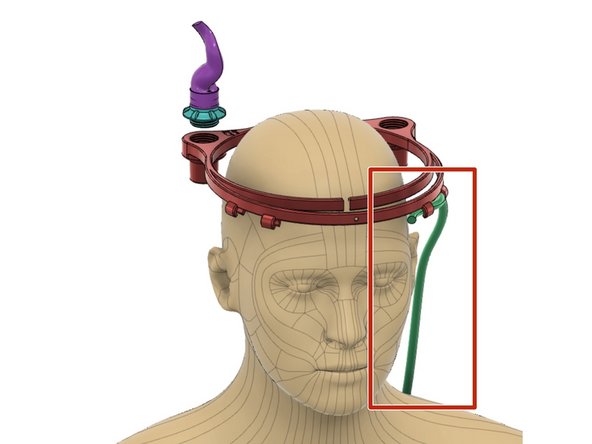
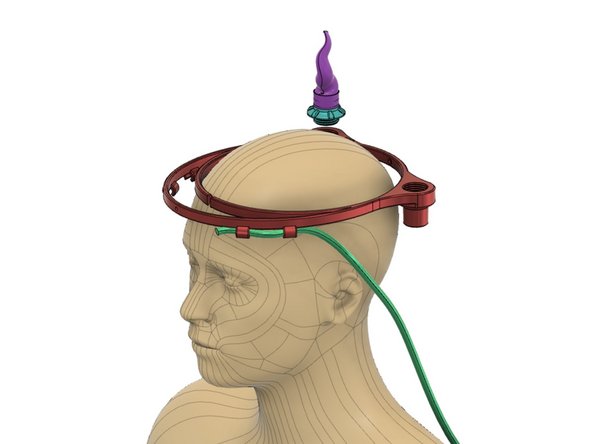
Oxygen / Compressed breathable air via small diameter O2 tubing is simplest option. Flow should be 10L/min.
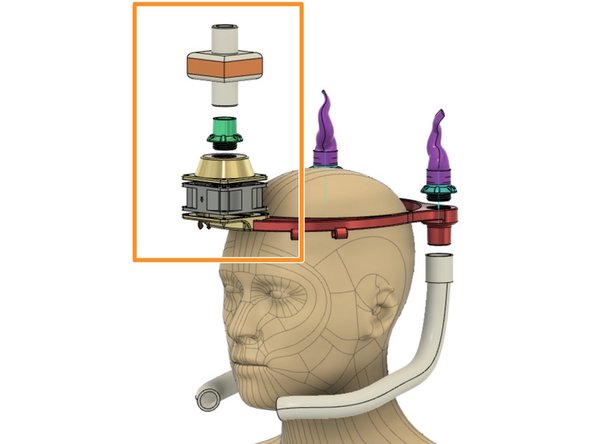
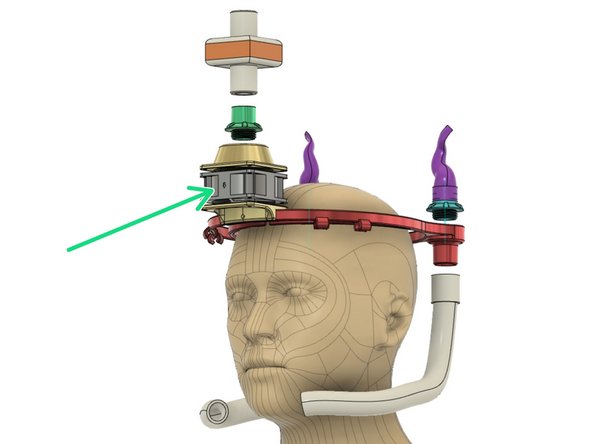
Filtered PAPR uses anesthesia viral filter and fan to provide clean air. 12 volt battery pack or AC adapter provides power.
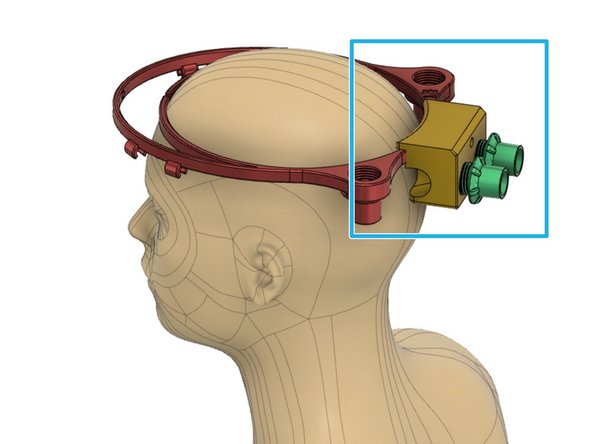
External Air via 22 mm connectors for connection of an external fan driven air source such as a Bair Hugger. A viral filter should be used for the inspired air.
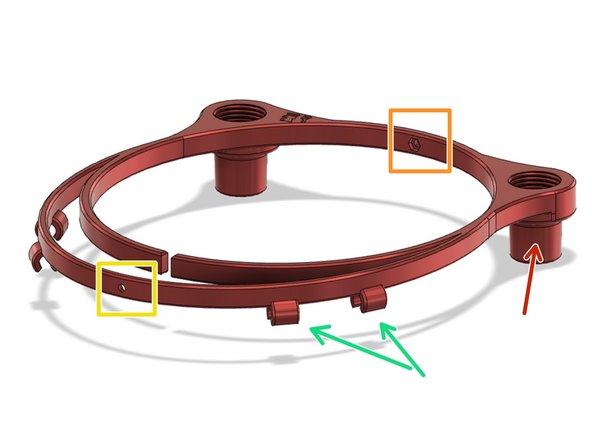
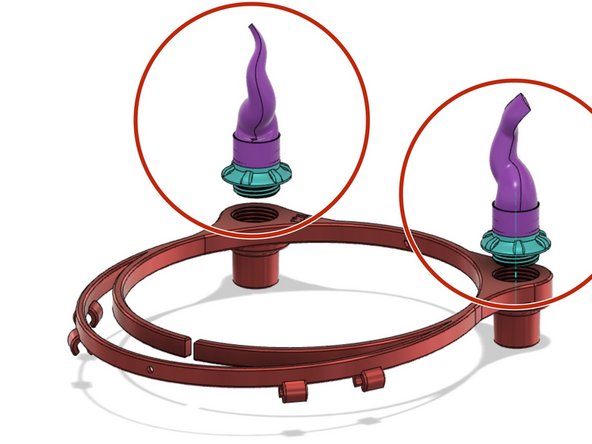
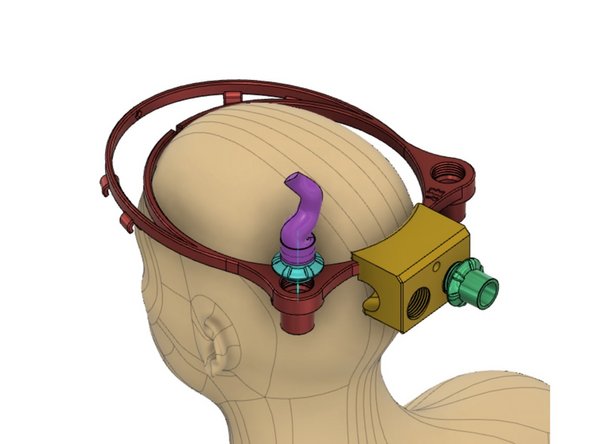
Expiratory flow through the bag is through one way flutter valve. These screw onto the halo to form an airtight, penetration through the bag.
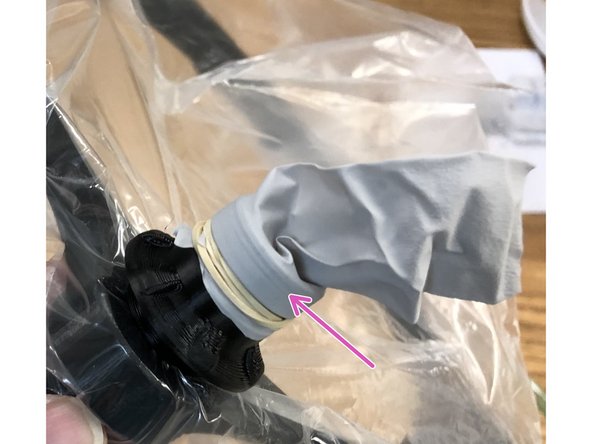
Flutter valves are fashioned from a cut-off glove finger rubber banded onto Flutter Valve Penetrator. End of finger is cut to allow air exit, but reverse flow is immediately stopped.
Halo operates with continuous positive pressure, the flutter valves rarely if ever need to close. Even during inspiration, the bag remains slightly pressurized.
Never use flutter valve penetrators without glove tips acting as valves and reverse flow reserve volume.
Simplest Halo configuration is for oxygen or medical air. This configuration uses the fewest consumables and is ideal for brief, aerosolizing procedures such as intubation or airway removal in a fixed location.
No viral filter is needed because inflowing gas is clean. A single expiratory valve contralateral to fresh gas flow is suggested. You must also wear a surgical mask because expiration is to room.
At 10 L/min flow, CO2 and water vapor clearance is adequate for most users.
You may wish to use medical air for prolonged use. Measured FiO2 in Halo is typically > 95%. Usual fire hazard warning for O2!
Exceptionally high FiO2 delivery capability may make this configuration useful on a patient.
External Air Connector block attaches to halo via an M3 nut and bolt. A pair of 22 mm penetrators create inspiratory port for incoming, clean air. Surgical mask should also be worn.
This configuration was intended to allow connection of an inline fan or Bair hugger with a viral filter and 22 mm tubing adapter.
Expiration can be via usual expiratory flutter valve or a 22 mm expiratory tube another penetrator to connector block.
In dual tubed configuration, expiratory limb MUST have a check valve at the end distal from user.
A fan draws room air through an anesthesia viral filter to fill the halo bag. Full mobility is possible with a 12 volt battery pack.
Prototype with 60 mm 2 watt tubaxial fan has limited air flow. To enhance airflow volume and routing, two expiratory valves are suggested. You can also add short, corrugated inside halo to better route airflow and reduce fogging.
I have successfully worn this configuration for several hours walking around my hospital and even rounded on patients. You can be mobile, but definitely cannot move fast.
About to trial a higher power, 51 mm blower style fan option instead of 60 mm tubaxial fan. With sufficient airflow increase, expiratory viral filters could also be added to obviate need for surgical mask.